
Understanding machining processes, equipment capabilities, and manufacturing constraints is essential for every mechanical design engineer. This guide covers the most common machining equipment, typical achievable tolerances, and practical process knowledge that directly impacts part design and cost.
- Machining Equipment & Capabilities
1.1 Conventional Lathe
A lathe is used primarily for machining shafts, discs, sleeves, and other rotationally symmetrical workpieces. It is the most widely used machine tool in mechanical manufacturing.
Achievable tolerance: ±0.01mm
1.2 Conventional Milling Machine
A milling machine is used to machine flat surfaces, slots, gears, complex profiles, and curved surfaces.
Achievable tolerance: ±0.05mm
1.3 Grinding Machine
Grinding machines perform finishing operations on workpiece surfaces. Most grinding machines use high-speed rotating grinding wheels, while some use abrasive stones, belts, or loose abrasives (e.g., superfinishing machines, belt grinders, lapping and polishing machines).
Achievable tolerance: ±0.005mm (small parts can achieve ±0.002mm)
1.4 Bench Work (Fitting / Manual Machining)
Bench work includes filing, sawing, layout work, drilling, reaming, tapping and threading, scraping, lapping, straightening, bending, and riveting.
1.5 CNC Lathe
CNC lathes are used for high-volume production, precision parts, and components requiring consistent quality and repeatability.
Achievable tolerance: ±0.01mm
1.6 CNC Milling Machine
CNC milling machines are used for high-volume production, precision parts, complex geometries, and large workpieces.
Achievable tolerance: ±0.01mm
1.7 Wire EDM (Electrical Discharge Machining)
Wire EDM is a precision machining process that uses a thin wire electrode to cut conductive materials. The type of wire used depends on the machine:
· Slow wire EDM uses brass wire as the electrode and achieves high precision and excellent surface finish.
· Medium wire EDM uses molybdenum wire.
Achievable tolerance:
· Slow wire EDM: ±0.003mm
· Medium wire EDM: ±0.02mm
Typical applications: Precision holes, fine slots, intricate contours, and features that are difficult to machine with conventional cutting tools.
1.8 Sinker EDM (Ram EDM / Die Sinking)
Sinker EDM uses a shaped electrode (typically graphite or copper) to erode material from the workpiece. The process is capable of machining materials and geometries that are difficult or impossible to machine with conventional methods — such as internal corners, small holes, complex cavities, and carbide materials.
Key advantages:
· No cutting forces — eliminates burrs and tool marks
· Not affected by material hardness or heat treatment condition
Achievable tolerance: ±0.005mm
- Machining Process Planning
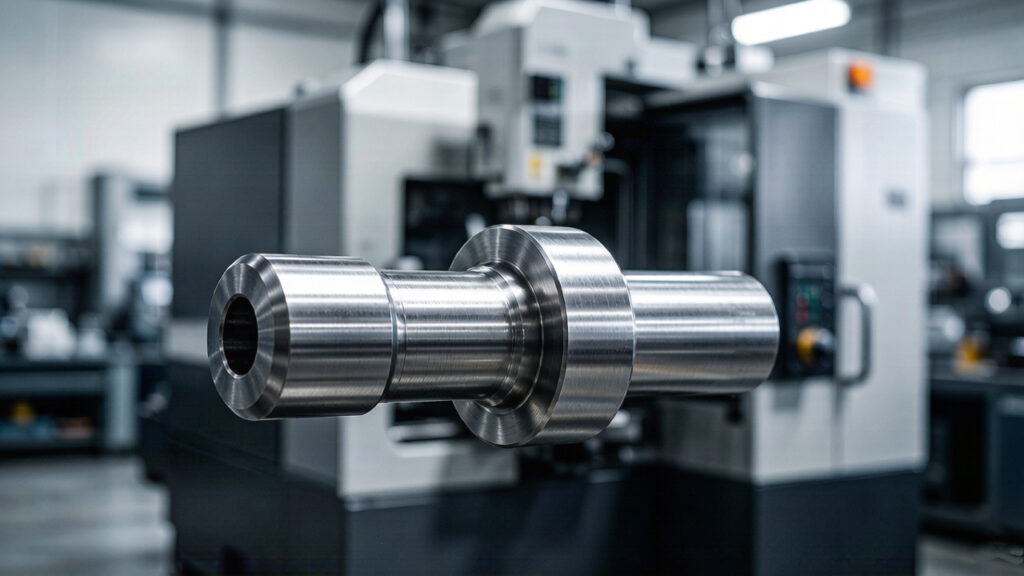
A machining process plan (operation sheet or route sheet) defines the sequence of operations and manufacturing methods for producing a part. It documents the most practical process and operating procedures in a standard format to guide production.
The machining process consists of a series of operations, each of which can be further divided into setups, positions, steps, and passes. The complexity of the process plan depends on:
· Part geometry and complexity
· Tolerances and quality requirements
· Production volume (batch size)
Different production volumes require different process strategies — what works for prototype quantities is rarely suitable for high-volume
production.
- Practical Process Knowledge for Design Engineers
The following guidelines are based on real-world manufacturing practice and should be considered during the design phase to avoid costly rework or scrapped parts.
3.1 Holes with Tolerances < 0.05mm
· Conventional milling cannot achieve this precision — requires CNC machining.
· For through-holes, wire EDM is also an option.
3.2 Precision Holes in Hardened Parts
· Through-holes: must be machined by wire EDM after heat treatment.
· Blind holes: must be pre-machined before heat treatment (roughing), then finish-machined after heat treatment.
· For non-critical holes: can be finished to size before heat treatment, allowing 0.2mm per side for heat treatment allowance.
3.3 Narrow Slots
· Slots under 2mm wide require wire EDM.
· Slots 3-4mm wide with significant depth also require wire EDM.
3.4 Machining Allowances
· Hardened parts: leave a minimum of 0.4mm roughing allowance per side.
· Non-hardened parts: leave a minimum of 0.2mm roughing allowance per side.
3.5 Plating Thickness
· Typical plating thickness ranges from 0.005mm to 0.008mm.
· Critical: parts must be machined to pre-plating dimensions — the plating thickness must be accounted for in the final part size.
Key Takeaway
Design engineers who understand machining processes — including equipment capabilities, achievable tolerances, and process constraints — can design parts that are not only functional but also manufacturable, cost-effective, and delivered on time. This knowledge separates capable designers from those who create costly, hard-to-make parts.